

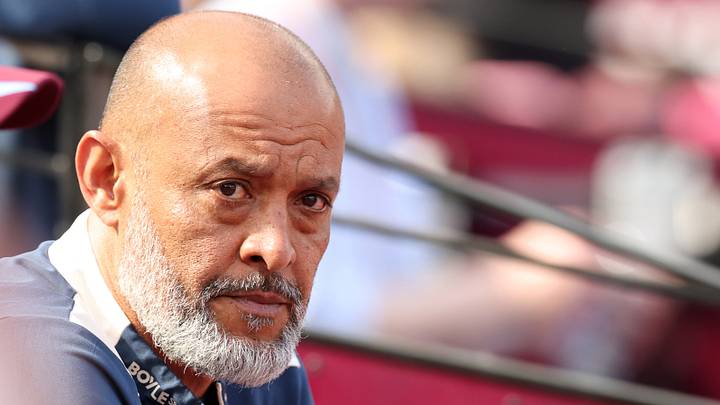
West Ham United's decision to retain Nuno Espírito Santo for the 2026-27 Championship campaign has been met with considerable surprise, and not a little controversy. The club confirmed that meetings were held with the Portuguese coach following their relegation from the Premier League, and that it was "pleased to confirm that he has expressed his continued commitment to the club." Not exactly a ringing endorsement, not a bold statement of intent — it is the only logical conclusion to a messy situation that left West Ham with very few cards to play.
Nuno was summoned to David Sullivan's Essex mansion on Bank Holiday Monday, with the outcome widely expected to be the 52-year-old's departure after eight months in charge. Sullivan is reportedly less convinced about keeping Nuno, while shareholder Daniel Křetínský is believed to be more supportive of retaining him for a Championship rebuild. That internal friction tells you everything. This was not a united board marching forward with a clear vision — it was a fractured leadership group arriving, reluctantly, at the least bad option available to them.
"It was hard for the board to concede and plan for next season in the Championship when they still had an opportunity to stay up"West Ham soruce
"Why the board sided with keeping Nuno was clear there was no other plan," a source confirmed. "Sullivan did not have one other than to suggest interviewing potential managers and hearing out their plans for immediate promotion. While divided, the overall feeling was that, with limited time, Nuno was the best way forward."
The board wanted to wait for relegation to be confirmed before making any decisions. "It was hard for the board to concede and plan for next season in the Championship when they still had an opportunity to stay up," the source said. "Everyone felt confident the lads would be at their best the final 5 matches and survive."
The timing made a change extraordinarily difficult. We are deep into May. The Championship season will be upon West Ham before they know it. Any incoming manager — whoever that might have been — would have had precious little time to assess a squad facing enormous upheaval, identify targets, conduct a pre-season, and instil a new philosophy. The risk of botching a rushed managerial appointment, as West Ham have done before, was simply too great. Couple that with not having a Director of Football in place to help make those decisions, and keeping Nuno seemed to be the only option.
As uncomfortable as it may be to admit, Nuno represents the closest thing to stability that this club can offer right now. He has the trust of the club's leadership, despite reports saying he has fallen out with several players. He has spent months understanding what West Ham have, what they lack, and what needs fixing. The majority of the board believes he has shown enough improvement during the second half of the campaign to lead a promotion charge. Whether fans agree with that assessment or not, the logic of continuity has genuine merit when the alternative is handing the keys to someone starting from scratch in June.
There is also the matter of the players themselves. A managerial change would almost certainly accelerate departures. Several senior players have working relationships with Nuno, and keeping those relationships intact — however imperfect — reduces the risk of the dressing room destabilising further over the summer. West Ham cannot afford a fire sale compounded by the chaos of a new manager demanding his own recruits.
Critics are right to point out that Nuno was hired to keep West Ham up and failed. But dismissing him entirely ignores a relevant piece of history. As Wolverhampton manager, Nuno won the second-tier Championship with 99 points in 2018. That is not a trivial achievement. It was a dominant, record-breaking campaign that demonstrated he understands what it takes to navigate the second tier with purpose and efficiency. West Ham's primary goal now is straightforward: get back up. And Nuno has done exactly that before.
A Shift In Power At The Top
Perhaps the most significant subplot here is what this decision says about the evolving dynamics within West Ham's ownership structure. Sullivan reportedly wanted to sack Nuno, while Křetínský is believed to have pushed to retain him. The fact that Křetínský's position appears to have won out suggests a meaningful shift in how power is exercised at the London Stadium. For years, Sullivan's voice has been the dominant one in the room. If this decision represents the beginning of a new balance of influence at the board level, that could be the most consequential development of this entire sorry episode — more important, perhaps, than the manager question itself.
None of this is to say keeping Nuno is the glamorous or inspiring choice. It isn't. The club's statement acknowledged that "relegation is obviously not the outcome that anyone at West Ham United would have wanted." That is an understatement. But football, like life, is often about managing imperfect realities rather than chasing ideal ones.
West Ham did not keep Nuno Espírito Santo because they believed he was the best manager for the job in some abstract sense. They kept him because the calendar, the squad dynamics, the boardroom politics, and the financial realities of life in the Championship all pointed in the same direction. Sometimes the only choice and the right choice are the same thing — even if nobody is particularly happy about it.
 Add us as a preferred source on Google