

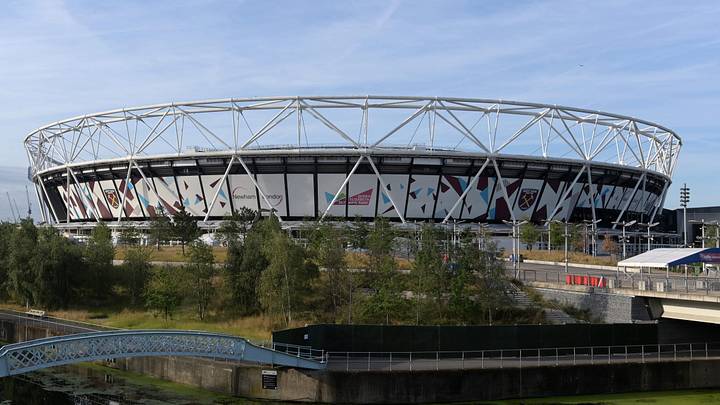
Since the moment West Ham United walked out of the Boleyn Ground for the last time in May 2016, a question has haunted the club's supporters: will this ever truly feel like home?
The London Stadium, cavernous, soulless to many, and for years managed by a public body with no real incentive to prioritise football, has been one of the most contentious venues in English football. The distance from the stands to the pitch. The retractable athletics track dictates the stadium's layout. The inability to control naming rights, catering, or even the goalposts. For a decade, West Ham's supporters have been tenants in a venue they never truly owned, watching the matchday experience wither while the landlord and the club argued in the courts.
That could all be about to change. With David Sullivan's resignation clearing the path for Daniel Křetínský to take meaningful control of the club, credible reports have emerged that the Czech billionaire is open to doing what Sullivan never contemplated seriously — buying the London Stadium outright.
West Ham struck a 99-year lease when they moved to the former Olympic venue in 2016, paying £15 million towards the overall conversion cost — with the bulk of the £323 million conversion funded by the public. Their basic annual rent sits at around £3.6 million per year, while the club still does not have to pay for heating, cleaning, maintenance, or even the cost of goalposts and corner flags. They also keep all ticket revenue.
The result has been a financial disaster for the London Legacy Development Corporation (LLDC), the public body responsible for managing the stadium. According to the LLDC's own financial report, losses for the fiscal year ending May 2024 amounted to approximately £21 million — even after excluding stadium investments. This translates to a deficit of around £504,000 per West Ham home game, costs borne entirely by London taxpayers. Independent experts have valued the stadium's operational business at close to zero.
And now, with West Ham relegated to the Championship, the agreement that underpins West Ham's occupation of the London Stadium effectively hardwires the club's sporting fortunes into the balance sheet of the public body that owns it. Relegation flips the stadium's finances into a deeper loss that must be covered by taxpayers, blurring the line between public infrastructure and private risk-taking.
The situation, in short, is becoming untenable for the public purse. The pressure to find a resolution — whether through a naming rights deal, a structural renegotiation of the lease, or an outright sale — is only growing.
Křetínský: "Nothing Is Off the Table"
It is against this financial backdrop that the possibility of a stadium purchase is gaining serious traction. According to sources, those close to Daniel Křetínský have indicated he would be "open to" buying the London Stadium as West Ham owner. The club has made clear that "nothing is off the table," including taking over the ground completely. The £200 million figure in the LLDC accounts provided to cover future losses has been challenged by auditors, with that number potentially rising significantly, increasing pressure on all parties to consider alternative arrangements.
The logic for Křetínský is compelling on multiple levels. As a seasoned investor whose business empire spans energy, media, and logistics, he understands better than most the value of owning assets rather than renting them. Insiders have suggested that changes could see the club take full control of the arena, able to run and manage it in a similar model to Manchester City at the Etihad, where the club assumed full control of their ground and invested heavily in the surrounding infrastructure, transforming it from a Commonwealth Games venue into one of European football's most commercially powerful stadiums.
That model is precisely what West Ham has been denied under the current arrangement. The LLDC retains control over naming rights, commercial decisions, and the fundamental configuration of the venue. Any sponsorship deal above £4 million per year must be split with the LLDC. West Ham cannot even agree a naming rights partner without the landlord's sign-off — a restriction that has seen multiple deals collapse over the years, costing everyone involved.
Owning the stadium would end all of that. It would give West Ham — and Křetínský — full commercial sovereignty over one of London's largest venues.
A Decade of Frustration
The financial case for buying the stadium is powerful. But for West Ham's supporters, the more visceral argument is a simpler one: the London Stadium, as currently configured, is not a proper football ground — and it has never been made to feel like one.
The problem begins with the ground's Olympic heritage. Originally built for the 2012 Olympics and converted for football, the stadium wraps around an athletics track that creates significant distance between the seats and the pitch. Longtime supporters resent the move from Upton Park — the intimacy of the old Boleyn Ground simply cannot be replicated in a bowl designed for athletics first and football second.
Unlike older football grounds, there is no tight wrap around the pitch. Distance is a real factor, and it affects both atmosphere and sightlines. The continuous bowl design keeps the footprint sleek but creates noticeable variation in viewing quality, and even "close" seats feel further away than at purpose-built football stadiums.
The consequences have been felt in the atmosphere — or, more precisely, the chronic lack of it. Away fans have consistently named West Ham's ground as the worst they visit in terms of atmosphere. Hammers fans came into their own at Upton Park on nights under the lights — but that kind of hostile, intimidating atmosphere has been almost completely killed at the London Stadium, with the bowl shape and distance from the pitch making it extraordinarily difficult to generate the noise and energy that once defined a West Ham home game.
Fan responses have been damning. Supporters have described "the constant queuing from Stratford International" as "soul destroying," spoken of the "non-existent atmosphere" and complained of being "surrounded by non-West Ham supporting tourists, day trippers and away fans in the home end." One season ticket holder described sitting in the upper tier as feeling like "it's almost illegal to start chanting at the top because you feel like a tit when no one else follows."
Some improvements have been made over the years. West Ham announced plans to install two new lower tier stands that would bring fans closer to the pitch by more than four metres, with the stand squared off in line with a more traditional football stadium configuration behind the goals. And the reconfiguration of the West Stand ahead of the 2022-23 season, which brought the upper and lower tiers closer together, added 1,800 seats and improved sightlines. But these have been incremental changes, made in negotiation with a landlord whose primary interest is not creating the perfect football atmosphere.
What Full Ownership Could Unlock
If Křetínský does acquire the London Stadium, the transformation possible would be substantial. Freed from the constraints of the LLDC lease, West Ham could begin the kind of radical reconfiguration the venue has always needed but never been permitted.
The immediate priority would be to close the gap between the fans and the pitch as dramatically as possible — removing or repurposing the athletics track sections that keep supporters at a frustrating distance, squaring off the ends of the stadium to create the sense of enclosure that generates atmosphere in the great English football grounds, and building a proper football identity into every corner of the venue.
Beyond the physical layout, ownership would hand the club full commercial control. A naming rights deal on their own terms. Full ownership of the catering, hospitality, and event revenue that the venue generates throughout the year. The ability to invest in the fabric of the stadium — the fan experience, the pre-match environment, the connectivity between supporters — without requiring the approval of a cash-strapped public body.
The Manchester City model that insiders have referenced is instructive. The Etihad was also a converted athletics venue — once a Commonwealth Games stadium — which City gradually moulded into a world-class football arena through targeted investment and complete control of the decision-making. The result is a ground that now generates enormous commercial revenue and has become inseparable from the club's identity.
That is the prize on offer for West Ham.
The Political Hurdle
There remains one significant obstacle. Any sale of the London Stadium requires political will from City Hall. West Ham's previous proposal to buy the stadium was rejected by Mayor of London Sadiq Khan, who described the venue as one of the city's "crown jewels."
That position may be harder to sustain as the financial losses mount. With the LLDC bleeding tens of millions of pounds per year to maintain a venue that an independent expert has valued at zero, and with West Ham's relegation compounding those losses further, the political calculus around a sale is shifting. The question for City Hall is whether the symbolic prestige of retaining public ownership of the London Stadium is worth the continuing and growing cost to the taxpayer.
Křetínský's known strengths as an investor — patient, methodical, willing to engage in complex multi-party negotiations — make him well suited to navigating that political landscape. He has spent five years watching West Ham from a distance, quietly increasing his stake and biding his time. He is not a man who rushes. But he is also not a man who waits forever.
Coming Home
There is something fitting, perhaps even poetic, about the idea of West Ham finally owning their home. The club left Upton Park reluctantly, lured by the promise of a 62,000-seat stadium that would allow them to "compete with the elite." That promise was never truly delivered — not because the stadium couldn't be great, but because the ownership structure of the venue prevented the club from ever making it fully their own.
Křetínský's potential purchase of the London Stadium would not just be a financial transaction or a property deal. For a fanbase that has felt like strangers in their own ground for a decade, it would represent something far more significant. The beginning, at last, of a real homecoming.
The Boleyn Ground is gone. But the spirit that filled it doesn't have to stay buried under the weight of an athletics track. Given the keys to their own stadium, West Ham and their supporters might finally start to feel at home again.
 Add us as a preferred source on Google