

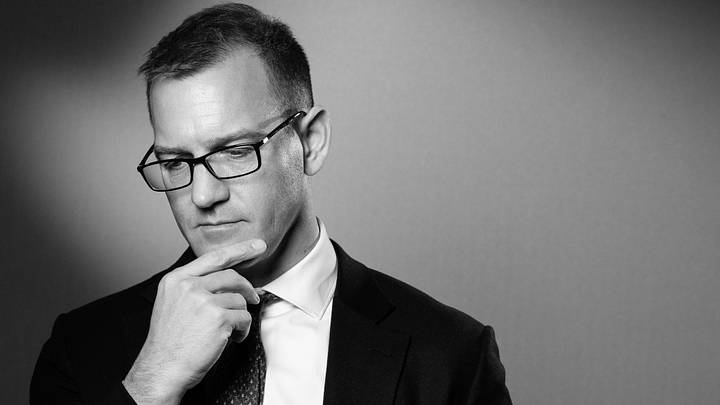
For years, Daniel Křetínský watched. He watched David Sullivan make decisions he disagreed with. He watched the club haemorrhage money, lose matches, and shed the goodwill of tens of thousands of supporters. He watched, with a reported 27 per cent stake and the influence of a passenger, as the club he'd invested heavily in slid into the Championship. West Ham fans have heard from Daniel Křetínský less than a handful of times since he bought 27 per cent of the club back in November 2021, and he has certainly lived up to his billing as one of football's most secretive figures.
But the waiting is over. With David Sullivan's shock resignation on Saturday morning, the dynamic at the London Stadium has shifted dramatically — and the man known as the "Czech Sphinx" appears ready, at last, to step out of the shadows.
The Reluctant Investor: How Sullivan Held Křetínský Back
When Křetínský arrived at West Ham in 2021, the expectation from supporters was that his enormous personal wealth — estimated at around £13 billion — would translate swiftly into the kind of transformative investment the club so desperately needed. It didn't. Instead, what followed was a period of growing frustration between the Czech billionaire and the club's dominant force, David Sullivan, that ultimately paralysed decision-making at the very top.
Former Everton and Aston Villa chief executive Keith Wyness suggested that Křetínský was "unhappy" with owner David Sullivan after the club's relegation from the Premier League, and that "Křetínský won't be happy with the way his investment has been handled by Sullivan on the football side. They're going to have to resolve their differences; maybe one of them may have to go."
The fault lines ran deep. According to sources, Křetínský and Sullivan could not see eye to eye even over the future of manager Nuno Espírito Santo, with the Czech billionaire wanting Nuno to stay while the club's English chairman was not convinced. And while Sullivan wielded day-to-day control, Křetínský found himself boxed out of the major calls that shaped the club's direction.
The club's apparent decision to pursue a director of football to work alongside Nuno was seen as indicative of Křetínský's growing influence — a role Sullivan was reportedly sceptical of, but one in which Křetínský saw real value.
Crucially, there were also serious financial concerns that deepened the tension. It emerged that equity injections could allow the board to raise £90 million over three years, which would increase the club's cash reserves without creating new debt or interest obligations — but existing shareholders would need to buy new shares to maintain their percentage. With Sullivan holding the majority stake and the reins, Křetínský's ability to inject meaningful capital on his own terms was constrained. He was a billionaire with his hands tied.
Křetínský Moves to the Front
Sullivan's resignation has now blown that door wide open. Křetínský remains fully committed to the club despite West Ham's relegation from the Premier League and is eager to strengthen both his influence and long-term involvement at the London Stadium. He believes West Ham can make an immediate return to the top division and was reportedly interested in expanding his share to 40 per cent even prior to Sullivan's resignation.
With the obstacle of Sullivan's majority control now removed, that ambition is free to accelerate. Last month, GSH reported that the Czech business tycoon was hesitant to invest any more of his personal wealth into the team because he believed Sullivan would mismanage it. Reports now indicate Křetínský is set to invest £90 million of his own private money into the club — a financial commitment that would represent the kind of decisive intervention West Ham supporters have been desperately craving.
The scale of the challenge ahead justifies it. It was announced in February that the club had lost £104.2 million before tax in their accounts for 2024-25, with revenue also down by £42.1 million — the consequences of years of mismanagement laid bare. Getting West Ham back to the Premier League, let alone competing at the top of it, will require serious money and serious leadership.
For the first time in years, both appear to be on the horizon.
Gold, Sullivan Jr., and a Board Rebuilt
Křetínský will not be operating alone. The emerging picture from the London Stadium is of a fundamentally restructured board, one designed to honour the club's history while embracing a more professional and coherent direction of travel.
According to BBC Sport's Sami Mokbel, co-owner Daniel Křetínský and co-chair Vanessa Gold will run the club, with Jack Sullivan — David's son — set to have some involvement.
It leaves two remaining joint-chairs: Vanessa Gold, daughter of the late David Gold, and Daniel Křetínský. Vanessa, who has been the voice for the Gold Family who own 25.1 per cent stake in the club, is expected to step up into a more prominent leadership role. She was appointed to the board in August 2023, taking on the shares in West Ham owned by her father upon his passing. Her steady presence at the club, largely free from the toxic controversy that surrounded Sullivan and Brady, makes her a unifying figure at a moment when unity is exactly what West Ham needs.
Jack Sullivan, meanwhile, is no stranger to the inner workings of the club. The 26-year-old son of the departing chairman has been a director at West Ham United and previously served as managing director of West Ham United Women, a role in which he oversaw significant growth for the women's team. His involvement in the new structure is expected to give some continuity to the Sullivan family's long association with the club, while ensuring the day-to-day operations benefit from someone with genuine institutional knowledge.
Day-to-day operations will meanwhile remain in the hands of interim chief executive officer Karim Virani, reporting into the current board of directors.
What Křetínský's West Ham Could Look Like
The Czech billionaire is not a conventional football owner. Dubbed the "Czech Sphinx" due to his low-profile approach to business, Křetínský made his fortune across a number of industries, from media to coal and gas, and has become the largest stakeholder in British supermarket chain Sainsbury's. He is methodical, patient, and private — qualities that frustrated West Ham fans in the short term, but which, in the right conditions, speak to someone building for the long term rather than seeking headlines.
Those conditions now exist. Free from Sullivan's shadow and armed with the financial power to act decisively, Křetínský appears ready to become the face of a rebuilt West Ham — not as a distant investor, but as an active presence in steering the club's future. His reported £90 million injection would immediately stabilise the club's finances, fund a meaningful Championship squad, and signal to players, staff and fans alike that the era of drift is over.
He believes West Ham can make an immediate return to the top division — and with the right backing, the squad under Nuno Espírito Santo has enough quality to make that ambition realistic rather than aspirational.
The Road Back
West Ham's task in the Championship is not merely to win promotion. It is to rebuild the entire culture of a club that has been fractured from top to bottom — between fans and owners, between boardroom factions, between the promise of the London Stadium move and the grim reality of what it delivered.
Fan group Hammers United had demanded that West Ham's running be "handed over to professionals with the expertise and drive to move the club forward." For the first time in a long while, there are genuine reasons to believe that is exactly what is happening.
Křetínský. Gold. Sullivan Jr. Virani. It is an untested combination, and there will be questions. But after sixteen years of Sullivan and the slow suffocation of a sleeping giant, West Ham fans may finally be permitted something they have been denied for too long — hope.
The rebuilding begins now. And this time, the man willing to invest his own money, is the man in charge.
 Add us as a preferred source on Google