

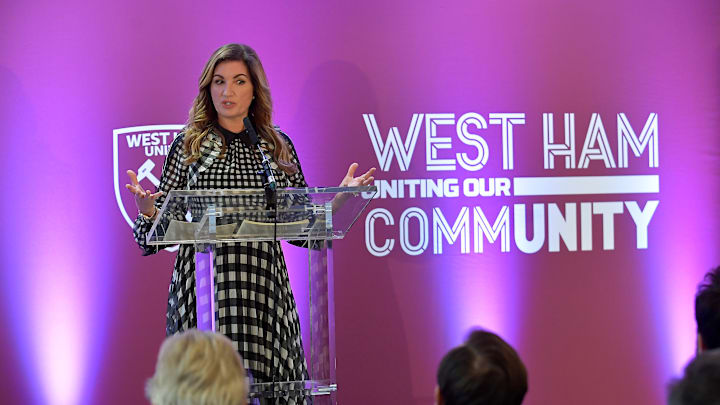
After 16 years as vice-chair, Baroness Karren Brady has stepped down from West Ham United with immediate effect. The news, which broke on 21 April 2026 amid the club’s desperate fight to avoid the drop, has sent shockwaves through the East End. Yet for many Hammers supporters, this isn’t the cathartic clean break they’ve demanded for seasons. It feels more like the board’s calculated sacrifice of its most visible figurehead to shield the real power brokers from accountability for two dismal campaigns.
Brady arrived in January 2010 when David Sullivan and David Gold took control. She quickly became the public face of the club: the Apprentice star, the businesswoman, the baroness who promised stability after the financial chaos of the Icelandic era. She helped steer West Ham through the Premier League wilderness, oversaw the controversial but ultimately what was perceived as a lucrative move to the London Stadium, and was routinely praised for keeping the books balanced in the early years. For a time, she was untouchable.
That changed dramatically over the last two seasons.
In 2024-25, West Ham scraped a 14th-place finish with just 43 points — functional mediocrity at best. The 2025-26 campaign has been even grimmer. With five games left, the side sits 17th in the Premier League on 33 points from 33 matches (8 wins, 9 draws, 16 defeats, goal difference -17). Relegation is a genuine threat. On the pitch, recruitment has been repeatedly slammed as scattergun and overpriced. Off it, the financial picture has turned apocalyptic: the club posted record losses of £104 million for 2024-25, with Brady’s own reported remuneration rising even as the red ink flowed.
Fans have had enough. Protests against the board — Sullivan and Brady in particular — have become routine. Banners reading “Sullivan & Brady Out” have filled the London Stadium. Supporters point to broken promises made back in 2010 about “no more financial gambles,” the endless stadium disputes, and a perceived lack of ambition that has left West Ham drifting in no-man’s-land between mid-table safety and European contention.
Is Brady a sacrificial lamb?
Insiders and commentators have openly described Brady’s departure as the board’s attempt to throw a high-profile bone to the baying wolves. Former Everton CEO Keith Wyness, speaking days ago, said he “wouldn’t be surprised” to see both Sullivan and Brady gone by season’s end, but the timing of Brady’s exit feels telling. She has long been the lightning rod: the one who fronts up in the media, the one fans love to hate, the one whose Apprentice fame makes her an easy target. Remove her, the theory goes, and the board buy themselves breathing space without fundamentally changing the ownership model or the decision-making structure that has delivered dysfucntion.
""She’s the face they can afford to lose. Sullivan remains the majority shareholder. Nothing changes behind the scenes unless the fans keep the pressure on.""An inside Source
One well-placed source put it bluntly: “She’s the face they can afford to lose. Sullivan remains the majority shareholder. Nothing changes behind the scenes unless the fans keep the pressure on.” Brady’s allies have pushed back, insisting her exit is personal and not forced, but the optics are damning. She leaves just as the accounts are laid bare and the team stares at the trapdoor.
Of course, Brady is no innocent bystander. As vice-chair she was intimately involved in transfer strategy, commercial deals, and the stadium transition that still divides supporters. Critics argue she became tone-deaf to fan anger, defending high executive pay while the team underperformed and the club haemorrhaged cash. Her public statements in recent months — including a column blaming Championship clubs for financial woes — only poured petrol on the flames.
Yet framing her solely as the villain ignores the bigger picture. West Ham’s problems run deeper than one executive. Chronic under-investment in certain areas, inconsistent managerial appointments, and a board culture that has grown complacent have all contributed. Sacrificing Brady might quiet the noise for a few weeks, but unless Sullivan and the rest of the ownership confront those structural issues, the same mistakes will simply be made by different people.
For West Ham fans, this moment is bittersweet. Many have waited years for Brady to go. Now she has, the fear is that it changes nothing. Despite a promise that there will be a new Director of Football announced before season's end. Will that appointment be a fresh voice or will it just be more of the same?
The Irons are in a fight for survival on the pitch and a fight for their soul off it. Karren Brady’s departure may be the headline, but it’s only the opening chapter. The board has played its sacrificial card. The question now is whether the fans will accept it — or demand the whole deck be reshuffled.
 Add us as a preferred source on Google