

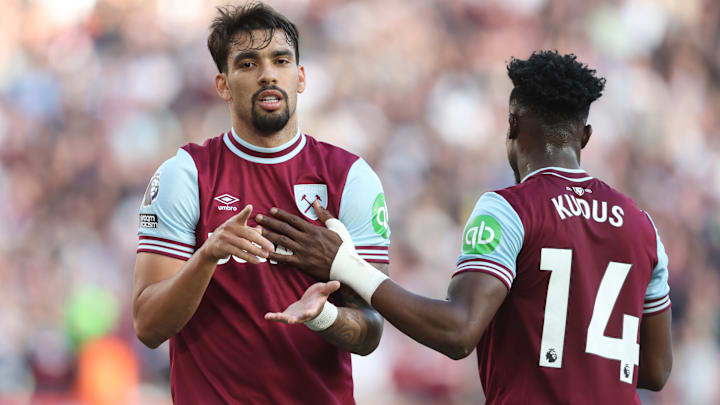
West Ham United's transfer market activity in recent years has sparked intense debate among fans, pundits, and analysts. With the club mired in a relegation battle during the 2025/26 Premier League season—sitting 18th with just 20 points from 23 matches as of late January 2026—questions have arisen about whether the Hammers' approach amounts to asset stripping or a deliberate attempt at roster rebalancing. The sales of star players like Mohammed Kudus and Lucas Paquetá, coupled with significant reinvestment, lie at the heart of this discussion.
The Case for Asset Stripping
Critics, including vocal sections of the West Ham fanbase, have accused owners David Sullivan and the board of prioritizing financial gain over on-pitch success. High-profile departures in the summer of 2025 included Mohammed Kudus to Tottenham Hotspur for £55 million and Lucas Paquetá to Flamengo for £35.75 million—sales that generated substantial income but depleted the squad of proven Premier League talent. These follow earlier big-money exits, such as Declan Rice's £105 million move to Arsenal in 2023.
Fan protests, including boycotts and demonstrations against Sullivan and vice-chair Karren Brady, highlight frustrations over perceived profiteering. Reports of club debt and financial pressures have fueled claims that player sales are being used to balance the books rather than build a competitive team. In a season plagued by managerial instability—Graham Potter was sacked in September 2025 after a winless start, replaced by Nuno Espírito Santo—and defensive frailties (45 goals conceded in 23 league games), some see these transfers as stripping the club of its most valuable assets without adequate replacement, contributing to a decline that has raised genuine relegation fears.

The January transfer window has seen a mass exodus of midfielders without a plan to replace them. The argument is, was this just West Ham's plan to shed payroll and not reinvest it because they are headed to relegation? The moves include a loan of James Ward-Prowse to relegation rival Burnley, a free transfer of Guido Rodriguez to Valencia, Andy Irving off to Sparta Prague, the termination of Igor Julio's loan with Brighton, and Luis Guilherme sold to Sporting CP. In addition, young academy players such as Kaelan Casey, Callum Marshall, and George Earthy have all been sent out on loan.
Fans have criticized Sullivan for asset stripping if he has no intention of filling those roster spots. Additionally, why not hold on to players like Earthy, who may be valuable if the team can't secure a replacement for Paquetá? Sullivan's reaction has been unsatisfactory stating that it's hard to obtain players in January when the team is facing relegation. But looking to the recent past, players like Jarrod Bowen, Tomas Soucek, and Jesse Lingard were all mid-season additions who came in while the team was near the bottom of the standings.
To both Sullivan and Nuno's credit, the players who have left the club, with the exception of Paquetá, were not in the team's plans. Also to Sullivan's credit, despite Nuno having diminished plans for center forward Callum Wilson, he convinced his manager to keep the player.
The Case for Roster Rebalancing

On the other side, West Ham's transfer record shows consistent reinvestment, suggesting a strategy of squad evolution rather than exploitation. In the 2025/26 season alone, the club spent approximately €198 million on arrivals, including high-profile signings like Mateus Fernandes (€44m, central midfield), Jean-Clair Todibo (€40m permanent, centre-back), Valentín "Taty" Castellanos (€29m, centre-forward from Lazio), and Pablo (€23m, centre-forward). Other additions, such as El Hadji Malick Diouf (€22m, left-back) and Mads Hermansen (€20.8m, goalkeeper), indicate a focus on youth and potential.
This followed heavy spending in the 2024/25 season (€144m+ on players like Max Kilman and Crysencio Summerville) and has resulted in a net spend of over €51 million in the current campaign, with income from sales partially offsetting costs. Over the past five years, West Ham has ranked among the Premier League's bigger net spenders, often in the top half of the division.
January 2026 activity further supports the rebalancing narrative: with the team struggling for goals (just 27 scored), Nuno has overseen striker reinforcements in Castellanos and Pablo, and the recent addition of Adama Traoré. Departures have largely involved aging or peripheral players—Michail Antonio, Aaron Cresswell, Emerson Palmieri, and Vladimir Coufal —freeing up wages and space for fresh talent.
The board has overseen a model akin to clubs like Brighton: sell high (e.g., Kudus and Paquetá after strong performances) and reinvest in promising recruits (Fernandes, Pablo, Diouf) to refresh the squad. Managerial changes—from David Moyes to Julen Lopetegui, then Potter, and now Nuno—have necessitated overhauls to fit new systems.
A Balanced Verdict
West Ham's transfers lean more toward ambitious roster rebalancing than outright asset stripping. The club has generated profit from sales but consistently plowed funds back into the squad, achieving a negative net spend over multiple seasons. Poor results stem more from recruitment misjudgments, integration issues, and tactical inconsistencies than a lack of investment.
That said, the strategy has yet to yield sustained success, and repeated sales of fan favorites without immediate silverware or stability have eroded trust. In a high-stakes relegation fight, the January 2026 signings could prove pivotal. If they help secure survival and build momentum, this period may be remembered as a necessary reset. Failure, however, risks validating the harshest criticisms of the board's approach.
Ultimately, West Ham's transfer policy reflects an effort to create the modern Premier League's realities: clubs must sell to buy under financial constraints. Whether it succeeds as rebalancing or fails as stripping depends on the results in the months ahead.
 Add us as a preferred source on Google